AI doesn't level engineers. It widens the gap tenfold.
Jad Naous and Aaron Levie see the same thing: AI's biggest gains go to people who already hold the complexity. What that changes in how you hire engineers.
The gap between decent engineers and great ones has grown tenfold.
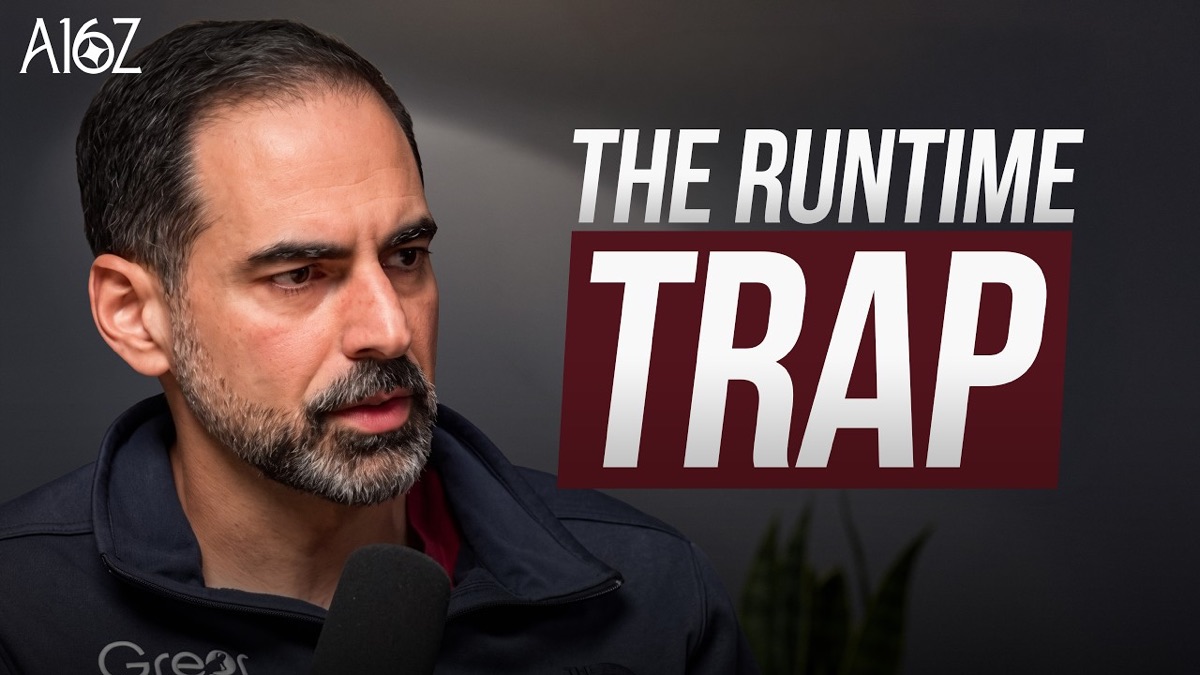
That's what Jad Naous, founder of Grepr, says on the a16z podcast. His team builds distributed systems. Since agents arrived, some learned to use them and others didn't, and with every new hire the gap widened.
His reason fits in one sentence: your brain has to hold the complexity, because the AI doesn't. The better you are at breaking a problem down, the more pieces of it you can hand off.
Aaron Levie, CEO of Box, says the same thing differently: the biggest gains from AI go to people who already have expertise, because they know what's true, what won't work, and what to keep from the model's output. Experts become more powerful.
We were sold the opposite: AI bringing everyone up to the same level.
If the gap is what's widening, hiring changes in nature. The question is no longer "can this person code?" Everyone produces code. The question is: what complexity has this person already held, on their own?
You can't read that in a job title. You read it in the systems they've built, the problems they've broken down, the decisions they made when the model was wrong.